The first step in choosing the right robot cleaner is to comprehend your pool. The effectiveness of a robotic pool cleaner depends on its compatibility with your pool. Inattention to these aspects could lead to an inefficient clean, or even harm to the machine or your pool. It can also cause the buyer to become frustrated. This guide will provide the top 10 requirements that you must be aware of before making a pool purchase.
1. Primary Surface Material
The most crucial factor to take into account is this. The pool's interior finish dictates the kind of brushing mechanism that the robot needs to use to clean effectively without causing harm.
Concrete/Gunite/Plaster (including Pebble Tec & Quartz): These are rough, durable surfaces that often develop algae films. They require a robot equipped with stiff bristle (often vinyl or nylon coated) brushes that are able to aggressively scrape and clean the surface to loosen embedded biofilms and dirt.
Vinyl Liner Vinyl is a soft, soft substance that can be easily scuffed or punctured. Robots made for vinyl need soft, non-abrasive wheels and brushes (typically composed of vinyl or rubber). A cleaner with stiff brushes for concrete could cause premature wear of the liner.
Fiberglass Fiberglass shells feature an even finish and a gel coating. Abrasive materials can scratch them as vinyl does. Robots with soft rubber brushes, or even brushless rolling systems, are the best. It is also possible that robots use less power to clean the surfaces when they are smooth.
2. Shape and Complexity of the Pool:
The layout of your pool determines the level of navigation and cable size required.
Rectangular Vs. Freeform: A simple rectangular pool is easier to maintain. Robots with random-path pathways are able to clean it efficiently. Robots with simpler designs may get caught in the curvatures or coves in freeform, L-shaped kidney-shaped, and other shapes of pools. It is best to choose an advanced robot with navigational algorithms (gyroscopic and intelligent-sensing).
Coves and Edges: Debris tends to gather in the transition between the floor of the pool and the wall. Make sure the design of the robot allows it to efficiently clean this curved area. Also, check if the pool is large and has flat sun shelves and ledges (Baja Shelves). Some robots are specifically designed for floors and wall cleaning.
3. Pool Dimensions (Lengths widths, lengths, and maximum depths)
These measurements aren't negotiable for selecting a device with an appropriate power cable.
Cable Length: The general norm is that the cable of the robot must be at least at least the length of the longest dimension of your pool (usually its length) and an additional few feet to run around the edge, and to ensure that the power supply is placed in a position that is not too close to the water. It's not uncommon for pools with a large or medium dimensions to have cables that measure 60 feet. Make sure you measure the longest length of the pool prior to buying.
Depth Capability: Most modern robots can clean up depths of between 8 and 10 feet without difficulty. However, if you have deep ends that go beyond 10 feet (e.g., a diving pool) it is important to verify the depth capacity of the robot. Infringing on this limit could harm the pump motor and could void the warranty.
4. Water Level and Tile/Coping Details:
Cleanliness is crucial at the point of contact between water and pool structure.
Waterline Tile Cleaning The waterline tile cleaning is an essential characteristic of mid-to high-end robots. If you are plagued by constant scum staining on glass, tile or stone along the waterline, then you need to look for a robot which claims to have superior waterline-cleaning capabilities. This is typically accomplished with an equipment with a slightly modified climbing style.
Type of coping: The substance which is used to cover the pool's wall (coping) is comprised of pavers, concrete stones, concrete, etc. If the wall has a sharp, strong overhang, it could be a potential cause of snagging or damaging the cable of the robot in time. When routing the cable, be conscious of this.
5. In-Pool Features, Obstacles and Features:
A pool that is clear of debris and dangers is easier to keep clean.
Main Drains/Vents: Check that the vents' covers are in line with the floor and securely secured. Drains older than 10 years that protrude could trap robots. The majority of floor water return valves aren't designed to present a danger.
Steps, Ladders and Built-in Seating can all disrupt the robot's routine of cleaning. Ladders positioned on the floor can catch the robot. If robots want to wash up and climb steps, benches, and ladders, they need enough power. Robots with simple navigation may not be able maintain these areas. Robots with greater intelligence should.
These flat, large surfaces require cleaning in the same way as steps. Check that the robot can traverse horizontal surfaces.
6. Entry and exit points (for robots):
Take into consideration the practicalities to get the robot into the water, and then out.
Physical Access - Do your need to move the robot across a deck or down a set of steps? If yes, weight is an important aspect. A robot that weighs 25 pounds is more manageable on a week-to-week basis than a 40 pounder. A storage caddy will be nearly necessary in this case.
Above-Ground pools: Robots that are designed specifically for aboveground pools are less often used. They are usually lighter and do not have the ability to climb walls. They are designed to be used on the floor or lower part of the wall.
7. Debris Types and Volumes
What features you require will depend on the main "job" your robot must complete.
If this is a major issue you face the filtering system is essential. It is essential to have a robot with fine cartridges for filtering.
Leaves Twigs and Acorns You require an automated system that comes with a huge trash bag, powerful suction pumps, and an intake which won't be able to easily block. Certain models that are high-end have impellers that can be able to macerate large leaves in order to stop blocking.
8. Location and outlet type of power source:
Robotic cleaners run on low voltage DC power supplied by a transformer that plugs into an outlet of standard.
GFCI Outlet Required For safety reasons, power sources must be connected into an Interrupter Ground Fault Outlet (GFCI). It is essential. If you don't have one close to your pool, you will require one to be installed by an electrician.
Distance from Pool - The transformer must be located at least 10 feet away from the edge of your pool to protect it from weather and water splashes. You will need a cable that is long enough to stretch from the transformer to the furthest part of your pool.
9. Local Climate and the Storage Environment
The way you keep your robot will affect its lifespan.
The storage of robots in the off-season is strongly discouraged by the majority of manufacturers. UV rays cause plastics and cables to break down. You require a cool, dry, shaded place (like an outdoor shed or garage) to store the cable and robot when not in use for prolonged periods.
Use the Robot During the season: If your robot is frequently used, you may want to consider a storage caddy that allows you keep the robot neatly close to the pool. You can avoid having cords get tangled in the deck.
10. Circulation and Filtration of the existing pool
A robot is able to operate on its own however it's still an integral part of the ecosystem that surrounds your pool.
Complementary Function: Understand that the main function of the robot is to clean debris off surfaces and remove any accumulated dirt. It does not replace your pool's main filtration and circulation system, that is responsible for removing the dissolved particles, dispersing chemicals, and stopping algae. The robot was designed to ease the burden on your main pool filter.
Chemical balance Even with a well maintained pool surface, algae could develop if you've got unbalanced water chemicals. The robot assists in maintaining cleanliness however it does not take away the necessity for proper sanitization or water balance. View the best conseils pour le nettoyage de la piscine for site tips including swimming pools stores near me, a swimming pool, pool cleaner with bag, pool cleaners, smart pool cleaner, aiper robot, swimming pool automatic vacuum, swimming pool for swimming, cleaner for swimming pool, cheap swimming pools and more.
Top 10 Tips For Easy Maintenance And Use Of Pool Cleaning Robotics
Although cleaning performance is the primary objective but the experience of utilizing and maintaining a robotic cleaner for pools is primarily defined by its user-friendliness and ease of maintenance. A robot that isn't easy to clean, use, and store can be difficult to use, and can hinder the ease of use it promises. These elements will determine if the robot is able to seamlessly integrate into your pool-care routine or if it becomes an added chore. Design that is user-friendly is crucial to long-term satisfaction.
1. Test for critical weight and handling:
The lifting of your robot into and out of the pool is probably the most frequently used interaction with it. The weight of the robot is an important aspect.
Weight Range: Robots come with a range of different weights that range from a manageable 15-20 lbs up to a 35-40 lbs. Though heavier models are robust and sturdy, they may also be harder for users to lift. This is especially true when the surface of the robot is wet or slippery.
Handles and Grips Check out the design. Do you have one or two handles that have an ergonomic design that is easy to grip? A poor-placed handle on a bulky product makes it difficult and unsafe to carry. This is a vital physical ergonomics aspect.
2. The Non-Negotiable Top Loading Filter System:
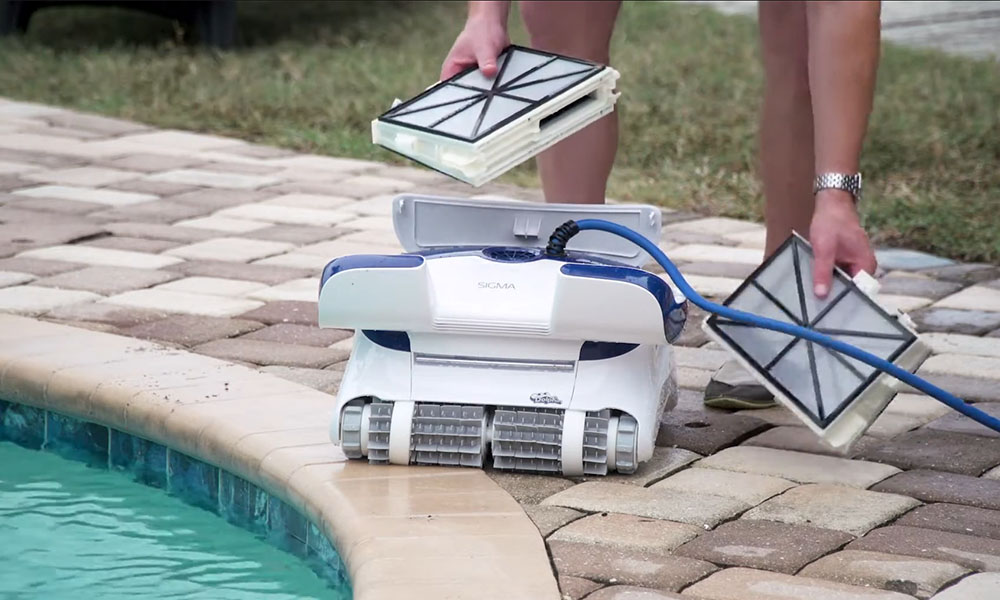
The filter is the most important maintenance component. The filters need to be accessible after lifting the robot. The top loading design allows you to take the dirty, clogged filters from the unit's top without turning the device. Flipping an unclean, bottom-heavy robot is a cumbersome, messy process which could result in debris spilling into your deck or pool. Top-loading can be clean, easy and effortless.
3. Maintenance of Filter Cartridges as well as their Longevity
The filters are consumable and require periodic maintenance.
Cartridges that are easy to remove: The pleated and fine-mesh cartridges are easy to remove from their casings. To clean them, you can use a water hose to spray the cartridges until they are completely free of dirt.
Replacement Schedule: Paper Cartridges are fragile and can degrade as time passes by with frequent washing. They usually need to be replaced once or twice every season, based on the usage. The cartridges with mesh that are made of higher-quality materials will last longer and often for several seasons. Consider the ongoing costs in your choice.
4. The Absolute Necessity of the Swivel Cord
This feature will eliminate tangling - a major problem in terms of usability. A swivel device that is attached to the cord is attached to the robot, or float allows it to freely rotate 360 degrees as the robot changes direction. It is necessary because without it, the cord can become knotted and tangled, which can cause the robot to become stuck or even shorten its reach.
5. The game-changing potential of a storage caddy
A storage cart that is dedicated to one purpose is not an accessory, but an important upgrade to usability.
Transport: This allows you to move the robot, without lifting all its weight from the storage area and then to the poolside.
Storage: The cord is well-wrapped and stored in a designated area to prevent it from becoming caught in. It also shields the cord against UV damages and dirt. This prevents the robot sitting directly on the surface, thus protecting its components. Models with caddys are a illustration of the company's desire to ensuring the user's convenience.
6. Cable Management and Length
The power cable is a crucial component of the system.
Affordable Length The cable must be long enough for it to extend beyond the GFCI power outlet to the pool. Take a measurement of the length of your pool and then add a few feet for routing around the deck. Cables that aren't long enough cause the robot to be useless.
Floatation should be provided by foam floats that are equally distributed across the length. This prevents the cable from sinking into robot's tracks or drives which can cause damage or cause tangling.
7. Cleaning Cycle Simplicity and Control
The robot's interface must be intuitive.
On-Unit Controls Vs. Remotes: The simpler models might only contain a single power button. Advanced models may come with a remote, or a apps for smartphones to choose cycles. Think about what you like the convenience and ease of programming of a single button or an advanced remote.
Cycle Clarity Clearness of Cycles: The cycles available (Quick Clean Full Clean Floor Only) must be clearly marked and easily selectable. The robot must give an easy-to-read feedback, like flashing lights or beeps, in order to verify its start.
8. Access to Drive and Brush Components and Wear:
Tracks and brushes can be worn even if they're not utilized every day.
Inspection: Examine the bristles regularly for wear indicators (e.g. bristles becoming longer and more stiff) and check the tracks and wheels for indications of getting worse.
Easy Replacement: Reusable components are an advantage. Make sure that the manufacturer has replacement belts or brushes for tracks and drives in addition to ensuring that their user manual contains specific instructions. You can save money on service costs and prolong the life of your unit by taking this step.
9. Physical Storage Requirements
The robot must be stored in a safe place.
Space: The robot's power supply and the cable coiled must be kept in a cool, dry, and sheltered location like a garage or shed. It should never expose itself to sunlight direct. UV rays are recognized to destroy plastics and the cable's sheathing will eventually get damaged.
Storage off-season It is essential that the unit be cleaned and dried thoroughly prior to winter storage or long-term storing. The manual will provide specific guidelines. Most often, it will advise storing your unit in a manner which protects the internal components.
10. The User Manual and Customer Support Ecosystem:
Support and documentation is accessible to make sure that the software is easy to use.
Clarity in Manual: A clear manual with easy-to-understand troubleshooting techniques, error code descriptions and diagrams can help to resolve small issues.
Support Accessibility Check the brand’s reputation in the area of customer service. Does the website provide helpful information Does it have an FAQ or tutorial video? Or a the number of customer service? It is important to have knowledgeable and accessible assistance when something goes wrong. See the top productos para limpiar paredes de piscinas for blog recommendations including pool by you, pool sweeping, cheap pool cleaners, swimming pool, pool s, waterline cleaning, pool website, waterline pool, swimming pool service companies, robot to clean the pool and more.